The Day I Learned to Say See You
May 25, 2025
/
Cairns
/
3 Min read
We met Chaseley early in the morning, before the heat had settled into the air.
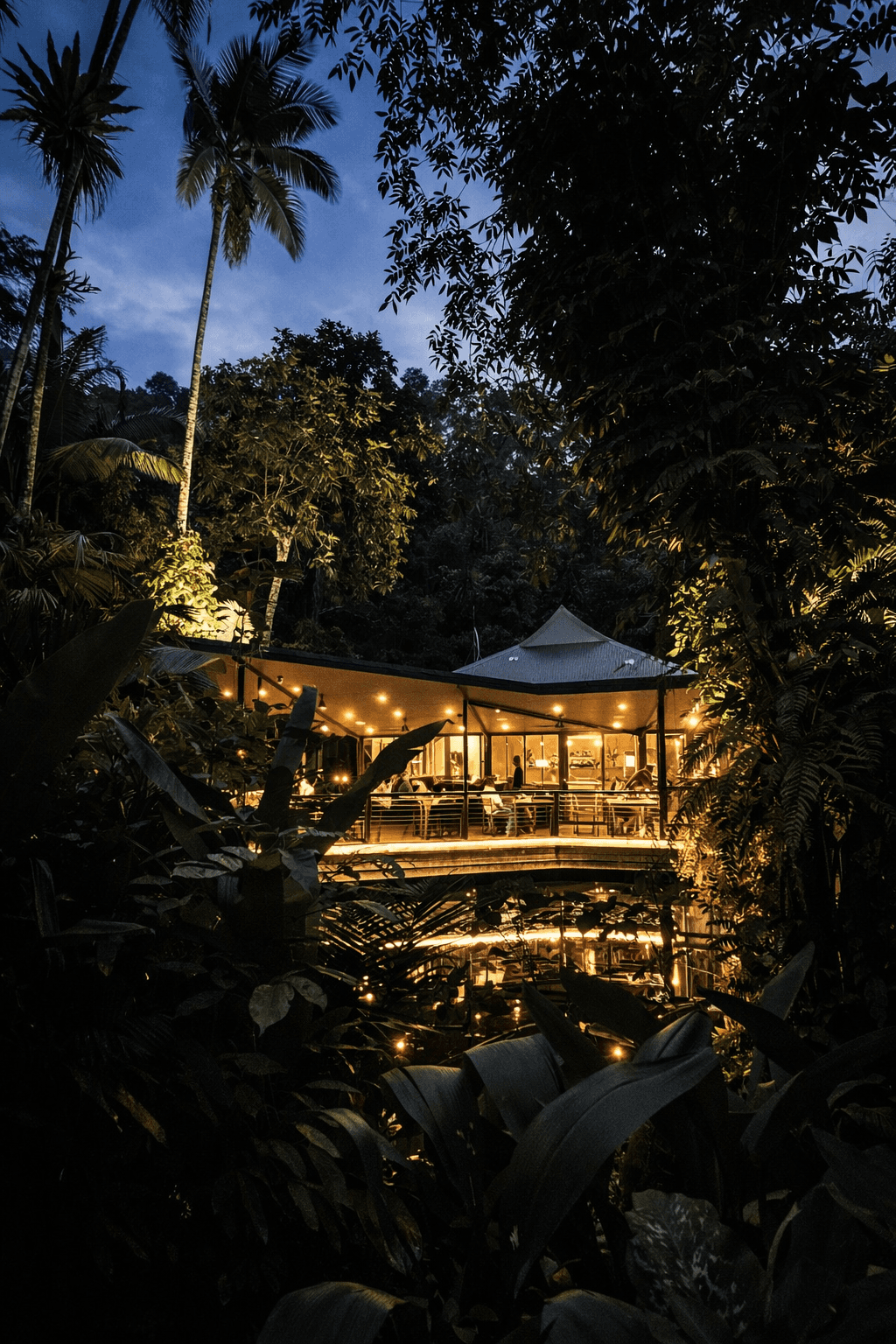
The Daintree was still waking. The light filtered down through layers of leaves, catching on vines and bark, the ground damp beneath our feet. Everything felt close together - trees growing into one another, roots breaking the surface, insects moving just out of sight.
She stood barefoot near the edge of the car park, the forest behind her dense and breathing. She introduced herself simply.
“My name is Chaseley,” she said. Then, after a pause, “My Indigenous name is Yindili, it means Kingfisher”
She told us she was a Kuku Yalanji woman. Kuku means to speak. Yalanji is the language of this place.
As we began walking, the forest closed in around us. The air was thick with moisture. Leaves dripped from the rain the night before. The ground was uneven, alive with small movements - skippers, mudcrabs, creatures we didn’t quite see.
She spoke about her great grandmother.
One of her favourite memories, she told us, was weaving baskets with her as a child. Sitting beside her, learning how to pull fibres tight enough to hold, but not so tight they snapped. Her great grandmother had twelve children, and later thirty-five grandchildren. A large family. A loud one. She smiled when she said this, as if the sound still lived nearby.
Her great grandmother was born along the Mossman river, in the Daintree rainforest, as a Kuku Yalanji woman. Later, she was taken to a mission. The houses along the river were destroyed. Chaseley didn’t linger. The violence of Australia’s history against Indigenous peoples was already felt. She simply placed the facts on the ground between us and kept walking.
At one point, she mentioned a tree her great grandmother was connected to. We passed many trees - tall, tangled, ancient - but she did not point. She didn’t say why. The way she said it made it clear that connection did not require justification.
We arrived at Cooya Beach (Kuyu Kuyu). She told us the name meant plenty of fish.
I hadn’t seen any yet. The forest didn’t seem to mind. I was standing in the emerald heart of the earth, the oldest tropical rainforest, and it felt enough to wait.
The forest gave way to open space. Mangroves edged the shore, their roots twisting into the sand. The tide was low. The sandbank stretched far into the distance, pale and exposed, etched with delicate vein-like patterns where water had recently passed. It looked less like a beach and more like a body - something alive, briefly laid bare.
We took off our shoes.
The sandbank beneath us was grooved, softening underfoot.
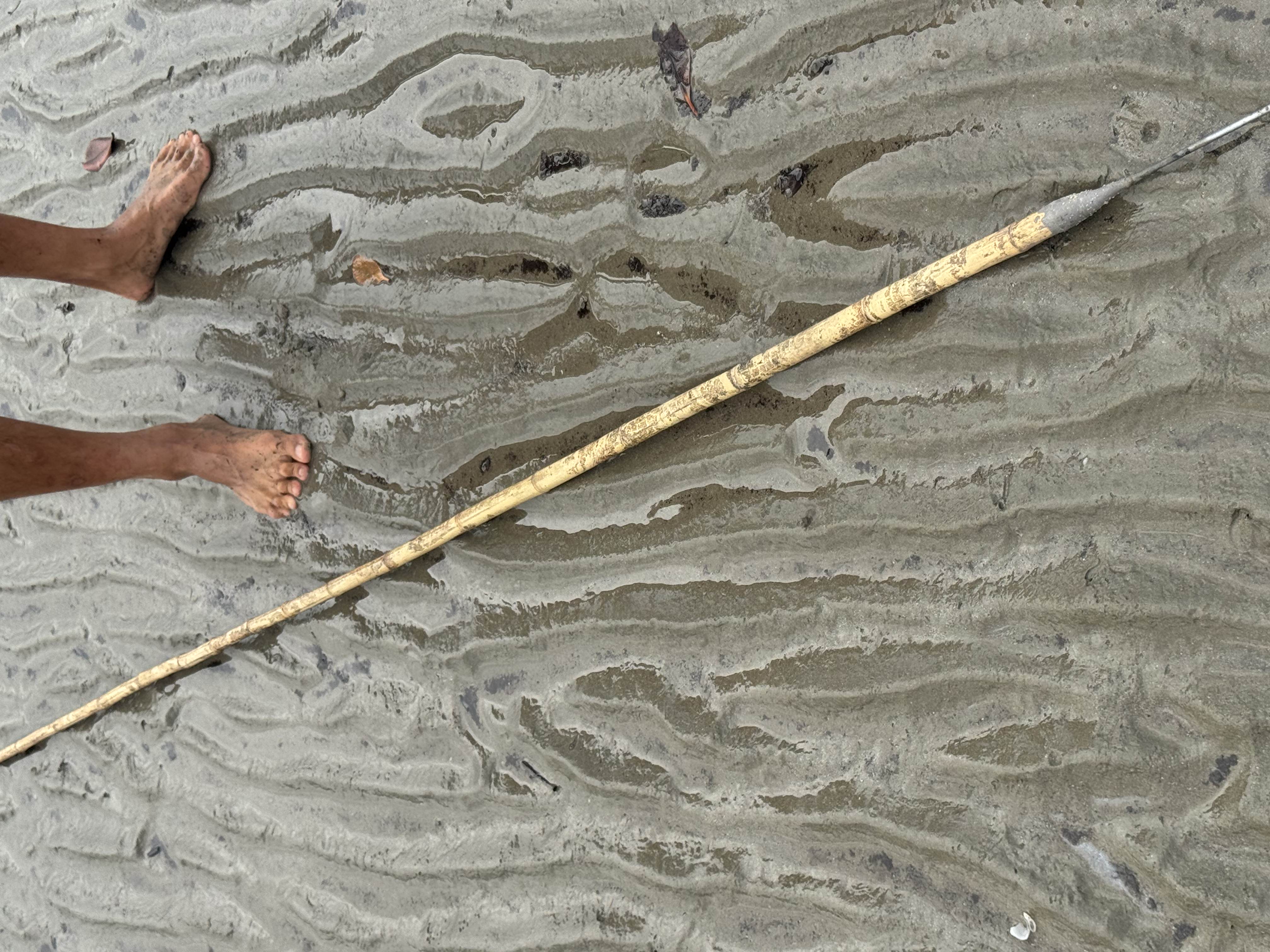
She handed each of us a spear for mud crab hunting. They were light, almost fragile. She laughed and told us they were tourist spears as she lined us up, not to worry if we broke them,
I watched the others go first. Their spears cut through the air cleanly, landing with soft thuds in the sand.
Holding it felt different than I expected. The spear was simple, but not crude. Balanced. Considered. It occurred to me that this shape had been refined over generations.
As we walked back along the sand, she taught us words.
Yalada — hello.
Juma Nyajil — see you.
She explained that in her community, they don’t say goodbye. You say "see you", because you will either see that person again in this life, or in the next.
Time, she said gently, doesn’t really end.
When we left, the forest still humming behind us, she smiled and said it again.
Juma Nyajil.
See you.
Not goodbye.
—
This story is shared with consent; Thank you to Walkabout Cultural Tours.